Listen to Article — 5 min
South Korea's KOSPI fell about 3% in Asian trading as Iranian strikes targeting U.S.- and Israeli-linked positions sent crude oil to a five-week high and ignited a regional flight from risk assets. Bitcoin and Ethereum dropped in step with equities, while Treasury yields rose as investors sold government bonds on oil-led inflation fears. Washington responded with a pledge to escort oil tankers and provide shipping insurance, but the geopolitical risk premium in crude remained intact. Risk-off Rout Sweeps Asian Benchmarks Seoul's benchmark index was the hardest hit in the Asia-Pacific region, with export-heavy technology, automobile, and battery stocks leading losses. The Korean won weakened against the dollar, amplifying concerns for South Korea, a major energy importer that now faces both higher oil bills and capital outflows. Japan's Nikkei 225, Hong Kong's Hang Seng, and Australia's S&P/ASX 200 all traded lower, though none matched the KOSPI's decline. The session functioned as the first full market reaction to the overnight escalation. Investors across the region reduced exposure to discretionary and cyclical assets, while commodities such as crude oil ran in the opposite direction. The shift was plain across every traded time zone, from currency desks to crypto exchanges. Crude Jumps as Iran Conflict Escalates Oil traders priced a fresh geopolitical premium into Brent and West Texas Intermediate, lifting benchmarks to their highest levels in five weeks. The core concern is supply disruption near the Strait of Hormuz, one of the world's most critical energy shipping chokepoints. Any prolonged closure or attack on tanker traffic in that corridor would hit global supply chains and challenge central banks already battling inflation. The market's reaction was reflected across a broad set of risk indicators: KOSPI:` down roughly 3% as foreign investors sold South Korean large-caps. Brent crude:` at a five-week high as US-Iran military tensions escalated. Bitcoin (BTC):` trading lower as crypto assets tracked equities. Ethereum (ETH):` under pressure alongside the broader digital asset market. U.S. 10-year Treasury yield:` rising as bond prices fell on oil-driven inflation concerns. Crypto Tumbles with Global Risk Assets Digital assets were not insulated from the macro shock. Bitcoin and Ethereum opened Asian trading under pressure, and exchange data showed active liquidation of leveraged long positions in the futures market. The sell-off in crypto matched the direction of stocks, reinforcing the narrative that Bitcoin and Ether now track risk appetite in the broader financial system. The drop had no single token-specific catalyst. Instead, it was tied to the same geopolitical repricing that moved oil, equities, and rates. Stablecoins remained stable, while traders moved capital into shorter-duration assets and cash-like positions. The shift underscored how quickly Middle East headlines can reverberate through digital asset markets. Washington Steps in to Steady Shipping Routes President Donald Trump announced that the U.S. Navy would escort oil tankers through high-risk waterways and that the federal government would provide insurance coverage to shipping operators. The commitment helped U.S. futures recover some ground in early post-announcement trading, but crude failed to give back its gains. Oil prices did not retreat far from their session highs, indicating that the supply risk premium remained in place. The response also put a spotlight on inflation policy. If energy prices stay elevated, central banks may be forced to hold interest rates higher for longer. That creates a second-order risk for equity valuations, bond markets, and cryptocurrencies, which are especially sensitive to liquidity conditions and rate expectations. Market Snapshot: Global Risk Gauges Respond to Iran Strikes Traded Instrument / Market Intraday Move / Snapshot Primary Driver KOSPI Down roughly 3% Iran strikes and crude supply fear Brent crude oil Five-week high Escalating US-Iran military conflict Bitcoin (BTC) Lower in Asian trading Risk-off crypto deleveraging Ethereum (ETH) Under pressure Broad digital asset sell-off U.S. 10-Year Treasury yield Higher Inflation risk from oil gains What Happened in Asian Markets After Iran Strikes? Asian markets sold off sharply as investors weighed the risk of a wider Middle East conflict. South Korea's KOSPI fell about 3%, leading regional losses, while crude oil jumped to a five-week high. Why Did Oil Prices Jump to a Five-week High? Iran's strikes raised concerns about supply disruptions in critical oil transit routes, especially the Strait of Hormuz. Traders added a geopolitical premium to crude benchmarks, pushing Brent and WTI higher. How Did Iran's Strikes Impact Bitcoin and Ethereum? Bitcoin and Ethereum traded lower as crypto markets mirrored the risk-off tone in equities. Futures liquidations amplified the move, but no blockchain-specific fundamentals changed. What Is the Connection Between Middle East Tensions and Crypto Prices? Cryptocurrency markets have become increasingly correlated with traditional risk assets during geopolitical shocks. When investors cut exposure to volatile holdings, digital assets often fall alongside stocks. Which Global Market Data Points Are Traders Watching Next? Traders are monitoring oil prices, U.S. Treasury yields, the dollar, and any official statements from Washington or Tehran. The U.S. equity market open is the next major test of risk appetite.
Follow Our News on Google
Be instantly informed of developments.
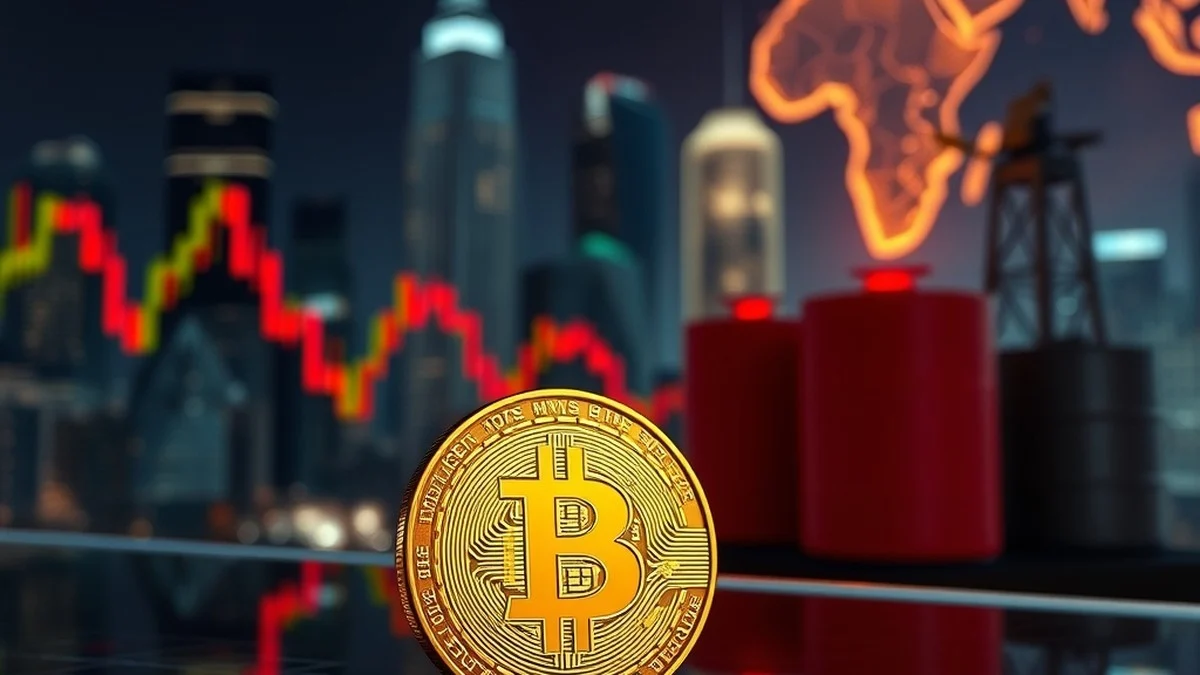
South Korea’s KOSPI fell about 3% in Asian trading as Iranian strikes targeting U.S.- and Israeli-linked positions sent crude oil to a five-week high and ignited a regional flight from risk assets. Bitcoin and Ethereum dropped in step with equities, while Treasury yields rose as investors sold government bonds on oil-led inflation fears. Washington responded with a pledge to escort oil tankers and provide shipping insurance, but the geopolitical risk premium in crude remained intact.
Risk-off Rout Sweeps Asian Benchmarks
Seoul’s benchmark index was the hardest hit in the Asia-Pacific region, with export-heavy technology, automobile, and battery stocks leading losses. The Korean won weakened against the dollar, amplifying concerns for South Korea, a major energy importer that now faces both higher oil bills and capital outflows. Japan’s Nikkei 225, Hong Kong’s Hang Seng, and Australia’s S&P/ASX 200 all traded lower, though none matched the KOSPI’s decline.
The session functioned as the first full market reaction to the overnight escalation. Investors across the region reduced exposure to discretionary and cyclical assets, while commodities such as crude oil ran in the opposite direction. The shift was plain across every traded time zone, from currency desks to crypto exchanges.
Crude Jumps as Iran Conflict Escalates
Oil traders priced a fresh geopolitical premium into Brent and West Texas Intermediate, lifting benchmarks to their highest levels in five weeks. The core concern is supply disruption near the Strait of Hormuz, one of the world’s most critical energy shipping chokepoints. Any prolonged closure or attack on tanker traffic in that corridor would hit global supply chains and challenge central banks already battling inflation.
The market’s reaction was reflected across a broad set of risk indicators:
- KOSPI:` down roughly 3% as foreign investors sold South Korean large-caps.
- Brent crude:` at a five-week high as US-Iran military tensions escalated.
- Bitcoin (BTC):` trading lower as crypto assets tracked equities.
- Ethereum (ETH):` under pressure alongside the broader digital asset market.
- U.S. 10-year Treasury yield:` rising as bond prices fell on oil-driven inflation concerns.
Crypto Tumbles with Global Risk Assets
Digital assets were not insulated from the macro shock. Bitcoin and Ethereum opened Asian trading under pressure, and exchange data showed active liquidation of leveraged long positions in the futures market. The sell-off in crypto matched the direction of stocks, reinforcing the narrative that Bitcoin and Ether now track risk appetite in the broader financial system.
The drop had no single token-specific catalyst. Instead, it was tied to the same geopolitical repricing that moved oil, equities, and rates. Stablecoins remained stable, while traders moved capital into shorter-duration assets and cash-like positions. The shift underscored how quickly Middle East headlines can reverberate through digital asset markets.
Washington Steps in to Steady Shipping Routes
President Donald Trump announced that the U.S. Navy would escort oil tankers through high-risk waterways and that the federal government would provide insurance coverage to shipping operators. The commitment helped U.S. futures recover some ground in early post-announcement trading, but crude failed to give back its gains. Oil prices did not retreat far from their session highs, indicating that the supply risk premium remained in place.
The response also put a spotlight on inflation policy. If energy prices stay elevated, central banks may be forced to hold interest rates higher for longer. That creates a second-order risk for equity valuations, bond markets, and cryptocurrencies, which are especially sensitive to liquidity conditions and rate expectations.
Market Snapshot: Global Risk Gauges Respond to Iran Strikes
| Traded Instrument / Market |
Intraday Move / Snapshot |
Primary Driver |
| KOSPI |
Down roughly 3% |
Iran strikes and crude supply fear |
| Brent crude oil |
Five-week high |
Escalating US-Iran military conflict |
| Bitcoin (BTC) |
Lower in Asian trading |
Risk-off crypto deleveraging |
| Ethereum (ETH) |
Under pressure |
Broad digital asset sell-off |
| U.S. 10-Year Treasury yield |
Higher |
Inflation risk from oil gains |
What Happened in Asian Markets After Iran Strikes?
Asian markets sold off sharply as investors weighed the risk of a wider Middle East conflict. South Korea’s KOSPI fell about 3%, leading regional losses, while crude oil jumped to a five-week high.
Why Did Oil Prices Jump to a Five-week High?
Iran’s strikes raised concerns about supply disruptions in critical oil transit routes, especially the Strait of Hormuz. Traders added a geopolitical premium to crude benchmarks, pushing Brent and WTI higher.
How Did Iran’s Strikes Impact Bitcoin and Ethereum?
Bitcoin and Ethereum traded lower as crypto markets mirrored the risk-off tone in equities. Futures liquidations amplified the move, but no blockchain-specific fundamentals changed.
What Is the Connection Between Middle East Tensions and Crypto Prices?
Cryptocurrency markets have become increasingly correlated with traditional risk assets during geopolitical shocks. When investors cut exposure to volatile holdings, digital assets often fall alongside stocks.
Which Global Market Data Points Are Traders Watching Next?
Traders are monitoring oil prices, U.S. Treasury yields, the dollar, and any official statements from Washington or Tehran. The U.S. equity market open is the next major test of risk appetite.
This article is provided for informational and educational purposes only. It is not offered or intended to be used as legal, tax, investment, financial, or other advice. The digital asset market is highly volatile, speculative, and subject to rapid regulatory changes. While we strive to ensure the accuracy of the information presented, market conditions change quickly, and data may become outdated. You are solely responsible for your own research (DYOR) and financial decisions. ATHPost, its owners, and its authors assume no liability whatsoever for any direct or indirect financial losses, liquidations, or damages arising from the use of this content.