Listen to Article — 7 min
Japan’s abrupt monetary policy pivot sent shockwaves through global financial markets on Tuesday, wiping out over $150 billion from the nation’s stock market and triggering a sharp sell-off in risk assets. As the Bank of Japan (BOJ) signals a definitive end to the era of “Abenomics,” Bitcoin and the broader crypto market now face a critical test of their resilience in a rapidly repricing liquidity environment. The BOJ’s Hawkish Surprise and “Abenomics” Ending The catalyst for the turmoil came from a series of hawkish signals out of Tokyo. Markets are now pricing in an 88% probability of a rate hike at the BOJ’s September meeting, according to Bloomberg data, a dramatic shift from just weeks ago when the central bank was expected to hold steady. U.S. Treasury Secretary Scott Bessent, in a statement to Bloomberg, explicitly declared that “Abenomics is ending,” adding that Japan’s yield curve control and ultra-loose monetary policy “are no longer sustainable in a world of rising rates.” The BOJ’s preliminary July decision to allow bond yields to rise, combined with a stronger yen, has triggered a violent unwind of the carry trade - a strategy where investors borrow yen at low rates to invest in higher-yielding assets abroad, including cryptocurrencies. Key Metric / Event Previous Value / Status Current Impact / Market Reaction BOJ September Rate Hike Odds 45% (early July) 88% (as of Tuesday) Japan Stock Market (Nikkei 225) ~39,500 Down ~8% intraday, $150B+ erased USD/JPY Exchange Rate 161.00 153.50 (yen strengthens sharply) Bitcoin (BTC) Spot Price ~$65,000 Dropped to $61,200, then recovered to $62,500 Total Crypto Market Cap $2.45T Fell to $2.28T, losing $170B in 24 hours Bitcoin Enters the “Japan Blast Radius” CryptoSlate reported that “Bitcoin enters Japan blast radius after economy hits a terrifying breaking point,” describing how the digital asset’s correlation with Japanese equities has surged to its highest level in over a year. On-chain data from Glassnode showed that leveraged long positions in Bitcoin futures on exchanges like Binance and Bybit were liquidated to the tune of $280 million within hours of the Nikkei’s plunge. The immediate reaction saw Bitcoin drop from a local high of $65,000 to $61,200 before finding support. Analysts at CryptoRank noted that “XRP and other altcoins tied to Japanese retail trading flows suffered even steeper losses,” with XRP falling 12% from $0.48 to $0.42. The yen’s appreciation forced Japanese retail investors - who traditionally hold large positions in crypto - to unwind their leveraged bets to meet margin calls in yen-denominated assets. The Carry Trade Reverse: Why Crypto Is Vulnerable The mechanics of the Japan rate shock are straightforward but devastating for risk assets: Carry Trade Mechanics: Investors borrow yen at near-zero interest rates, convert to dollars or other currencies, and buy higher-yielding assets like U.S. Treasuries, equities, or Bitcoin. Unwind Triggers: A sudden BOJ rate hike or hawkish rhetoric makes the yen appreciate, forcing borrowers to buy back yen to repay loans, selling off their risk assets in the process. Crypto Exposure: Crypto derivatives markets, especially on exchanges catering to Asian traders, are highly sensitive to yen liquidity. Data from Coinglass shows that open interest on Bitcoin perpetual swaps denominated in yen fell 18% in the last 24 hours, indicating mass liquidation. “The scale of the yen carry trade unwind is unprecedented since the 1998 crisis,” said one senior trader at a Tokyo-based hedge fund, speaking on condition of anonymity. “Crypto is caught in the crossfire because it’s the most liquid risk asset after equities. When the margin calls hit, Bitcoin is the first to be sold.” What Bitcoin’s Historical Correlation Data Shows A technical breakdown of Bitcoin’s correlation with the yen and Japanese equities reveals a pattern that investors should monitor closely: 30-day rolling correlation between BTC/USD and USD/JPY: rose from -0.15 to +0.62 over the past week, meaning Bitcoin now moves in the same direction as the yen (stronger yen = weaker Bitcoin). Bitcoin’s beta to the Nikkei 225: increased to 1.8, implying that for every 1% drop in Japanese stocks, Bitcoin falls roughly 1.8%. Volatility index (BVOL) for Bitcoin: 24-hour realized volatility jumped to 72%, the highest since the March 2024 sell-off. Key Support Levels for Bitcoin: $60,000 (psychological level), $58,000 (200-day moving average), $55,000 (previous cycle high). Resistance Levels: $63,500 (pre-shock level), $65,000 (monthly high), $68,000 (May 2024 high). Global Contagion Fears and Central Bank Responses The sell-off in Japan quickly spread to other Asian markets. South Korea’s KOSPI fell 3.5%, and the Hang Seng Index dropped 2.1%. European and U.S. futures also pointed to a lower open. The Federal Reserve has not yet commented, but traders are pricing in a higher probability of a rate cut in September as a safety valve against the Japan-induced volatility. The key question for crypto markets is whether the BOJ’s tightening will be gradual or aggressive. If the BOJ raises rates by 25 basis points in September, the carry trade unwind could accelerate, potentially dragging Bitcoin below $60,000. However, if the BOJ signals a pause, the recovery could be swift. How Will Bitcoin React? Three Scenarios Analysts at BeInCrypto outlined three potential paths for Bitcoin: Scenario 1 - Sharp Correction: If the BOJ hikes and the yen strengthens to 150 or lower, Bitcoin could test $55,000 - $58,000 as leveraged positions unwind further. Scenario 2 - Stabilization: If the BOJ offers dovish forward guidance, the yen could stabilize around 155, allowing Bitcoin to recover to $63,000 - $65,000. Scenario 3 - Decoupling: If Bitcoin’s correlation with Japanese equities breaks down (e.g., due to ETF inflows or a major adoption catalyst), the digital asset could stage a V-shaped recovery independent of yen moves. As of press time, Bitcoin is trading at $62,100, down 4.5% from the 24-hour high. The crypto market remains on edge, with all eyes on Tokyo for the next BOJ communication. What Happened with Bitcoin Today? Bitcoin dropped sharply from $65,000 to $61,200 after Japan’s Nikkei 225 lost over $150 billion in market value. The sell-off was triggered by rising odds of a Bank of Japan rate hike in September, which strengthened the yen and forced a massive unwind of the yen carry trade, impacting risk assets globally. Why Did Japan’s Rate Shock Affect Crypto? Cryptocurrencies, especially Bitcoin, are highly correlated with risk assets and are often used as a liquid source of collateral for leveraged traders. When the yen appreciates sharply, investors who borrowed yen to buy crypto must sell their crypto holdings to repay loans, causing a cascade of liquidations. What Is the Yen Carry Trade and Why Does It Matter for Bitcoin? The yen carry trade involves borrowing yen at near-zero interest rates to invest in higher-yielding assets like Bitcoin. When the BOJ tightens policy, the yen rises, forcing borrowers to buy back yen and sell their risk assets, including crypto, amplifying price declines. Is Bitcoin Going to Crash Further After Japan’s Stock Market Plunge? Bitcoin’s immediate support lies at $60,000 and $58,000. If the BOJ follows through with a rate hike in September, further downside is possible. However, if the central bank signals a pause, a recovery toward $63,000 - $65,000 is likely. The market remains highly volatile. What Should Crypto Investors Do During the Japan Rate Shock? No financial advice is provided. However, investors should monitor the USD/JPY exchange rate, BOJ official statements, and Bitcoin’s correlation with Japanese equities. Tight stop-losses and risk management are crucial during periods of extreme volatility.
Follow Our News on Google
Be instantly informed of developments.
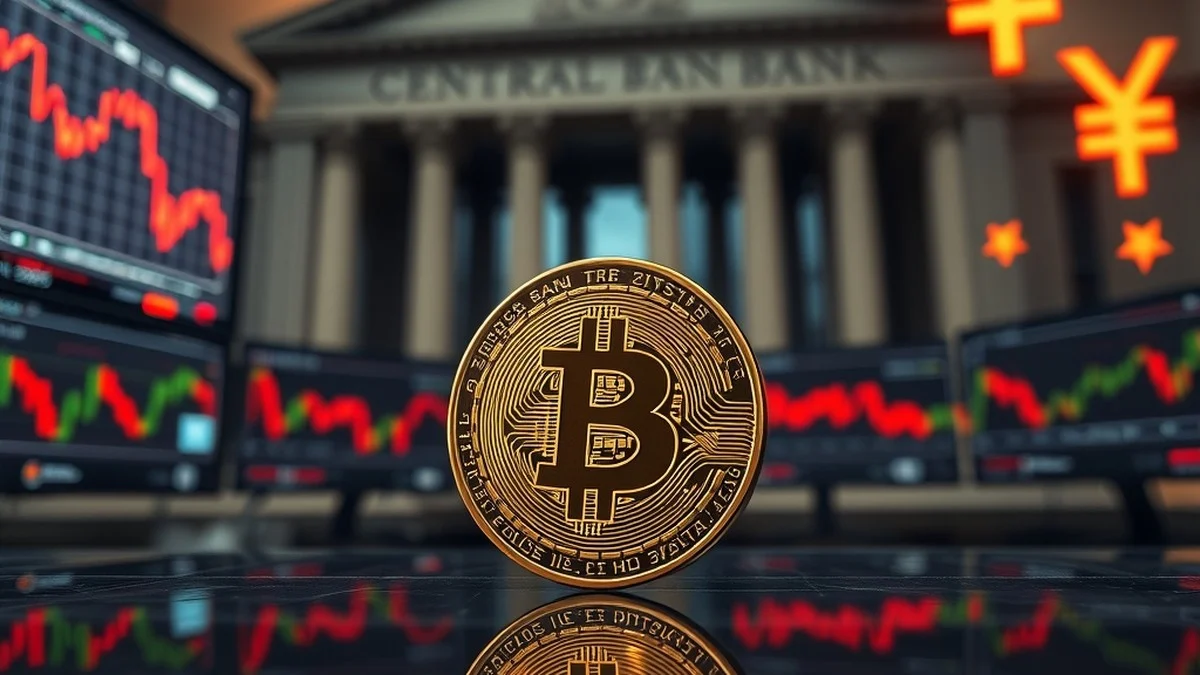
Japan’s abrupt monetary policy pivot sent shockwaves through global financial markets on Tuesday, wiping out over $150 billion from the nation’s stock market and triggering a sharp sell-off in risk assets. As the Bank of Japan (BOJ) signals a definitive end to the era of “Abenomics,” Bitcoin and the broader crypto market now face a critical test of their resilience in a rapidly repricing liquidity environment.
The BOJ’s Hawkish Surprise and “Abenomics” Ending
The catalyst for the turmoil came from a series of hawkish signals out of Tokyo. Markets are now pricing in an 88% probability of a rate hike at the BOJ’s September meeting, according to Bloomberg data, a dramatic shift from just weeks ago when the central bank was expected to hold steady. U.S. Treasury Secretary Scott Bessent, in a statement to Bloomberg, explicitly declared that “Abenomics is ending,” adding that Japan’s yield curve control and ultra-loose monetary policy “are no longer sustainable in a world of rising rates.”
The BOJ’s preliminary July decision to allow bond yields to rise, combined with a stronger yen, has triggered a violent unwind of the carry trade – a strategy where investors borrow yen at low rates to invest in higher-yielding assets abroad, including cryptocurrencies.
| Key Metric / Event |
Previous Value / Status |
Current Impact / Market Reaction |
| BOJ September Rate Hike Odds |
45% (early July) |
88% (as of Tuesday) |
| Japan Stock Market (Nikkei 225) |
~39,500 |
Down ~8% intraday, $150B+ erased |
| USD/JPY Exchange Rate |
161.00 |
153.50 (yen strengthens sharply) |
| Bitcoin (BTC) Spot Price |
~$65,000 |
Dropped to $61,200, then recovered to $62,500 |
| Total Crypto Market Cap |
$2.45T |
Fell to $2.28T, losing $170B in 24 hours |
Bitcoin Enters the “Japan Blast Radius”
CryptoSlate reported that “Bitcoin enters Japan blast radius after economy hits a terrifying breaking point,” describing how the digital asset’s correlation with Japanese equities has surged to its highest level in over a year. On-chain data from Glassnode showed that leveraged long positions in Bitcoin futures on exchanges like Binance and Bybit were liquidated to the tune of $280 million within hours of the Nikkei’s plunge.
The immediate reaction saw Bitcoin drop from a local high of $65,000 to $61,200 before finding support. Analysts at CryptoRank noted that “XRP and other altcoins tied to Japanese retail trading flows suffered even steeper losses,” with XRP falling 12% from $0.48 to $0.42. The yen’s appreciation forced Japanese retail investors – who traditionally hold large positions in crypto – to unwind their leveraged bets to meet margin calls in yen-denominated assets.
The Carry Trade Reverse: Why Crypto Is Vulnerable
The mechanics of the Japan rate shock are straightforward but devastating for risk assets:
- Carry Trade Mechanics: Investors borrow yen at near-zero interest rates, convert to dollars or other currencies, and buy higher-yielding assets like U.S. Treasuries, equities, or Bitcoin.
- Unwind Triggers: A sudden BOJ rate hike or hawkish rhetoric makes the yen appreciate, forcing borrowers to buy back yen to repay loans, selling off their risk assets in the process.
- Crypto Exposure: Crypto derivatives markets, especially on exchanges catering to Asian traders, are highly sensitive to yen liquidity. Data from Coinglass shows that open interest on Bitcoin perpetual swaps denominated in yen fell 18% in the last 24 hours, indicating mass liquidation.
“The scale of the yen carry trade unwind is unprecedented since the 1998 crisis,” said one senior trader at a Tokyo-based hedge fund, speaking on condition of anonymity. “Crypto is caught in the crossfire because it’s the most liquid risk asset after equities. When the margin calls hit, Bitcoin is the first to be sold.”
What Bitcoin’s Historical Correlation Data Shows
A technical breakdown of Bitcoin’s correlation with the yen and Japanese equities reveals a pattern that investors should monitor closely:
- 30-day rolling correlation between BTC/USD and USD/JPY: rose from -0.15 to +0.62 over the past week, meaning Bitcoin now moves in the same direction as the yen (stronger yen = weaker Bitcoin).
- Bitcoin’s beta to the Nikkei 225: increased to 1.8, implying that for every 1% drop in Japanese stocks, Bitcoin falls roughly 1.8%.
- Volatility index (BVOL) for Bitcoin: 24-hour realized volatility jumped to 72%, the highest since the March 2024 sell-off.
- Key Support Levels for Bitcoin: $60,000 (psychological level), $58,000 (200-day moving average), $55,000 (previous cycle high).
- Resistance Levels: $63,500 (pre-shock level), $65,000 (monthly high), $68,000 (May 2024 high).
Global Contagion Fears and Central Bank Responses
The sell-off in Japan quickly spread to other Asian markets. South Korea’s KOSPI fell 3.5%, and the Hang Seng Index dropped 2.1%. European and U.S. futures also pointed to a lower open. The Federal Reserve has not yet commented, but traders are pricing in a higher probability of a rate cut in September as a safety valve against the Japan-induced volatility.
The key question for crypto markets is whether the BOJ’s tightening will be gradual or aggressive. If the BOJ raises rates by 25 basis points in September, the carry trade unwind could accelerate, potentially dragging Bitcoin below $60,000. However, if the BOJ signals a pause, the recovery could be swift.
How Will Bitcoin React? Three Scenarios
Analysts at BeInCrypto outlined three potential paths for Bitcoin:
- Scenario 1 – Sharp Correction: If the BOJ hikes and the yen strengthens to 150 or lower, Bitcoin could test $55,000 – $58,000 as leveraged positions unwind further.
- Scenario 2 – Stabilization: If the BOJ offers dovish forward guidance, the yen could stabilize around 155, allowing Bitcoin to recover to $63,000 – $65,000.
- Scenario 3 – Decoupling: If Bitcoin’s correlation with Japanese equities breaks down (e.g., due to ETF inflows or a major adoption catalyst), the digital asset could stage a V-shaped recovery independent of yen moves.
As of press time, Bitcoin is trading at $62,100, down 4.5% from the 24-hour high. The crypto market remains on edge, with all eyes on Tokyo for the next BOJ communication.
What Happened with Bitcoin Today?
Bitcoin dropped sharply from $65,000 to $61,200 after Japan’s Nikkei 225 lost over $150 billion in market value. The sell-off was triggered by rising odds of a Bank of Japan rate hike in September, which strengthened the yen and forced a massive unwind of the yen carry trade, impacting risk assets globally.
Why Did Japan’s Rate Shock Affect Crypto?
Cryptocurrencies, especially Bitcoin, are highly correlated with risk assets and are often used as a liquid source of collateral for leveraged traders. When the yen appreciates sharply, investors who borrowed yen to buy crypto must sell their crypto holdings to repay loans, causing a cascade of liquidations.
What Is the Yen Carry Trade and Why Does It Matter for Bitcoin?
The yen carry trade involves borrowing yen at near-zero interest rates to invest in higher-yielding assets like Bitcoin. When the BOJ tightens policy, the yen rises, forcing borrowers to buy back yen and sell their risk assets, including crypto, amplifying price declines.
Is Bitcoin Going to Crash Further After Japan’s Stock Market Plunge?
Bitcoin’s immediate support lies at $60,000 and $58,000. If the BOJ follows through with a rate hike in September, further downside is possible. However, if the central bank signals a pause, a recovery toward $63,000 – $65,000 is likely. The market remains highly volatile.
What Should Crypto Investors Do During the Japan Rate Shock?
No financial advice is provided. However, investors should monitor the USD/JPY exchange rate, BOJ official statements, and Bitcoin’s correlation with Japanese equities. Tight stop-losses and risk management are crucial during periods of extreme volatility.
This article is provided for informational and educational purposes only. It is not offered or intended to be used as legal, tax, investment, financial, or other advice. The digital asset market is highly volatile, speculative, and subject to rapid regulatory changes. While we strive to ensure the accuracy of the information presented, market conditions change quickly, and data may become outdated. You are solely responsible for your own research (DYOR) and financial decisions. ATHPost, its owners, and its authors assume no liability whatsoever for any direct or indirect financial losses, liquidations, or damages arising from the use of this content.